News – full story
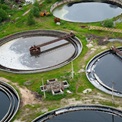
Many water treatment plants already use UV light in their processes
23/07/2015
Polymer nanoparticles and UV trap pollutants
Particles originally developed for drug delivery
Helen Tunnicliffe
A NOVEL method using biodegradable polymer nanoparticles and UV light could offer a simple and effective way to remove dangerous manmade pollutants from water and soil.
Removing toxic substances such as pesticides and endocrine disrupters like bisphenol A (BPA) can be expensive and time-consuming using traditional methods. Ferdinand Brandl and Nicolas Bertrand, both of MIT’s David H. Koch Institute for Integrative Cancer Research, together with colleagues from the Federal University of Goiás in Brazil, stumbled across the new method by accident whilst working on nanoparticles for drug delivery to cancer cells. The nanoparticles were designed to cleave apart when exposed to UV light, but the researchers decided that this wasn’t ideal as UV can damage cells.
When testing the particles, the team noticed that the particles aggregated when irradiated. Many water treatment plants already use UV light in their processes, and the researchers then came up with the idea of using the particles to adsorb manmade pollutants from water instead.
The nanoparticles are made from two polymers – polyethylene glycol, which is widely used in products such as toothpaste and eyedrops, and as a food additive, and polylactic acid (PLA), a biodegradable plastic used in compostable cups and suchlike. The researchers synthesise the nanoparticles at room temperature.
The nanoparticles have a hydrophobic core and a hydrophilic shell. The pollutant molecules, which are also hydrophobic, are attracted to the hydrophobic core and are adsorbed onto the surface of it. The nanoparticles are usually suspended within the water, but UV causes the outer hydrophilic layer to be shed, and the cores clump together. Once aggregated, the particles can be easily removed through filtration or sedimentation. The aggregation process is irreversible.
The researchers successfully removed BPA, phthalate plasticisers, which are known to be hormone-disrupting, and polycyclic aromatic hydrocarbons (PAHs), which form during the incomplete combustion of hydrocarbons are have been shown to be carcinogenic and mutagenic. Only a small amount of the nanoparticles is needed to remove a relatively large amount of the chemicals, as the particles have a high surface area to volume ratio.
“The interactions we exploit to remove the pollutants are non-specific,” says Brandl. “We can remove hormones, BPA, and pesticides that are all present in the same sample, and we can do this in one step.”
Bertrand says there are many other potential uses of the nanoparticles as well as environmental clean-up and remediation, including decaffeinating coffee or for analytical applications like cheap urine testing kits.
Nature Communications DOI: 10.1038/ncomms8765
