News – full story
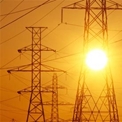
Germany has some of the highest electricity prices in Europe
30/11/2012
Small firms launch German energy challenge
Object to laws shielding industry from price rises
Richard Jansen

A GERMAN association claiming to represent consumers and small businesses is challenging a government policy shielding large industrial firms from growing energy costs.
The Bund der Energieverbraucher – the Association of Energy Consumers – has brought its case before the European Union (EU) antitrust regulators.
It is objecting to plans by the German government to massively invest in renewable and low-carbon electricity generation, subsidising the technology with surcharges on consumers’ energy bills. As the current policies stand, however, energy-intensive industries such as steel and paper production will be shielded from any increases.
Germany already has among the highest electricity prices in Europe, with prices per kWh almost 80% higher than in the UK and more than three times higher than in the US. The government is hoping the exemption will keep multi-national companies from moving their operations into countries with less stringent emissions targets.
However, the association argues that this unfairly favours the massive firms that are the country’s biggest consumers, leaving their smaller rivals and the general public to face “outrageous” price increases. The exemptions for energy-intensive industries counts as ‘state aid’ under European law, and as such can be scrapped if the EU deems it anti-competitive.
“We are looking into what the implications…are in terms of state aid, in particular for electricity repurchasing tariffs and for the exemptions of large-scale energy users,” European Commission spokesperson Antoine Colombani told the Wall Street Journal during a news briefing. “We are investigating, gathering information, discussing with the German authorities.”
If Bund der Energieverbraucher is successful in its bid, the decision may have implications far beyond Germany. Only yesterday, the UK – which has to follow the same European anti-trust laws – proposed a virtually identical policy, whereby energy-intensive industries would be exempt from new charges designed to fund investment in low-carbon power sources.
